
About the Conference
At itSMF Slovakia, we believe that inspired innovation is the cornerstone of delivering exceptional value to our customers. By enhancing customer engagement and experience, generating new revenue streams, and improving service quality, we continuously strive to exceed expectations. We understand that inspiration is key to advancing the tools and technologies we rely on every day. […]
Read MoreSpeakers

Enterprise Architect VÚB Banka

President Supreme Audit Office of the Slovak Republic

Director of the ICT Division IXPERTA

Portfolio Director PeopleCert

ITIL Senior Architect PeopleCert

Strategist, consultant, trainer, mentor, coach & facilitator | DASA Ambassador ict-123.com | itSMF Czech Republic

Executive Partner and Head of Consulting OMNICOM

Head of Digital Solutions IXPERTA

Cybersecurity Director at U. S. Steel Košice | Managing Partner at Makatura & Semančín

CTO, BoD member O2 Slovakia

Manager | Risk Consulting Ernst & Young

AI Strategic Advisor | Founder of Ai4Value Hubit Oy
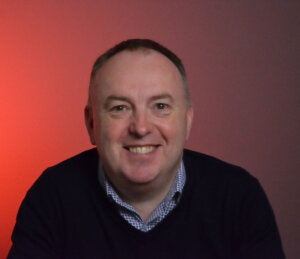
Helping customers move from SLA to XLA XLABS

Chief Security Officer Slovenská sporiteľňa, a.s.
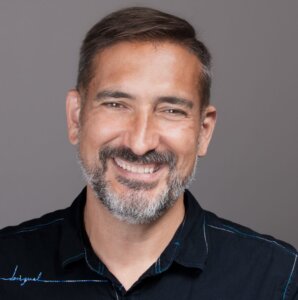
Transformational Leader | Agile and Lean Expert | Business Strategist | Keynote Speaker Improvement21

Chief ITSM Architect The Shiny New Thing that Really Helps
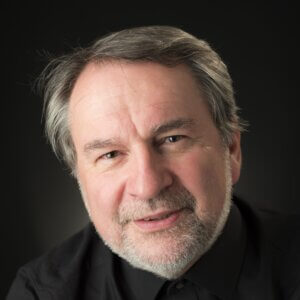
The Statutory Director Information Competence Development Center CEVRO College
Partners


Programme
October 22, 2025
12:45 pm - 1:00 pm
Opening (SK, EN)
28
2025-10-22
2025-10-22 13:00
12:45
00:00
Europe/Bratislava
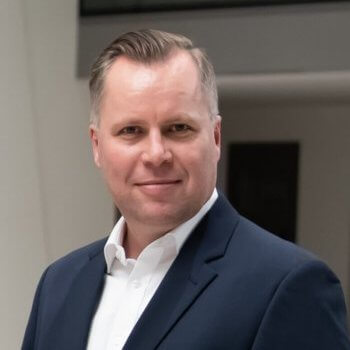
Igor Dimitrovič
itSMF Slovakia
Pavol Holbík
itSMF Slovakia
Martin Podhajský
itSMF Slovakia
Martin Lacko
itSMF Slovakia
Are you gambling with your IT (EN)
28
2025-10-22
2025-10-22 13:40
13:00
00:00
Europe/Bratislava
In 2021 Paul presented the shocking results of his global ‘The Shiny New Thing that Really Helps’ (SNTTRH) survey. The Shiny New Thing identified 5 critical success factors and 13 capability questions for the successful adoption of any shiny new best practice framework. The SNTTRH is based upon the findings from more than 4000 organizations in Attitude, Behavior, Culture workshops spanning more than 20 years. In 2025, together with Peoplecert Paul conducted the survey once again to a wider audience. In this session he will be revealing the results and comparing them to itSMF Slovakia results. Are you GAMBLING with your IT or are you successfully applying these 5 key areas for success? Paul will share some tips for success.

Paul Wilkinson
Chief ITSM Architect / The Shiny New Thing that Really Helps
So People Understand Us: Building Clear Communication Between IT and Busines (CZ)
28
2025-10-22
2025-10-22 14:10
13:40
00:00
Europe/Bratislava
The success of IT departments depends not only on technology and expertise but also on the ability to communicate clearly with non-IT colleagues. This presentation explores how IT can become a true partner for organizational growth by focusing on clarity, transparency, and empathy. It highlights practical steps such as reducing jargon, using accessible language, leveraging service desk channels effectively, and designing communication through UX/UI principles. The session provides concrete recommendations to improve collaboration and user satisfaction by ensuring IT is understandable and approachable.

Martin Kasík
Head of Digital Solutions / IXPERTA
How to do it well? Lessons from digital projects (SK)
28
2025-10-22
2025-10-22 14:50
14:10
00:00
Europe/Bratislava
The digitalization of public administration in Slovakia presents a challenge that requires a clear vision, effective management, and investment in skilled professionals. Despite significant funding from both public and European sources, Slovakia lags behind most EU countries in digitalization. There is a lack of strong leadership, coordination between the state, private sector, and civil society, as well as an action plan and strategic management. The Supreme Audit Office of the Slovak Republic highlights the need for transparency, efficient use of resources, and strengthening of managerial capacities. Key challenges include the low adoption of electronic services by citizens and unsuccessful projects due to the absence of a clear strategy. The future of digitalization lies in a focus on cybersecurity, the development of IT specialists, data analytics and artificial intelligence, as well as transparency and accountability in services. Together, we can ensure that digital projects deliver real value to society.

Ľubomír Andrassy
President / Supreme Audit Office of the Slovak Republic
AI Use cases beyond GenAI (EN)
28
2025-10-22
2025-10-22 16:00
15:20
00:00
Europe/Bratislava
The world is buzzing with the opportunities of Generative AI, but let us not forget about the so-called Traditional AI". This presentation will show you via real life use cases where AI such as NLP/NLU and Machine Learning have been applied and what have been the results. The presentation also gives an overview of the Traditional AI components and solutions linked to them

Katriina Valli
AI Strategic Advisor | Founder of Ai4Value / Hubit Oy
October 22, 2025
4:00 pm - 4:30 pm
Enterprise service management (ESM) – Advanced ITSM & Enterprise architecture
Architecture Is Dead. Long Live Code!
28
2025-10-22
2025-10-22 16:30
16:00
00:00
Europe/Bratislava
Manual architecture modelling cannot keep pace with today’s dynamic delivery pipelines, resulting in outdated and unreliable diagrams. This session introduces Architecture as Code—an approach that automates model generation, integrates with CI/CD workflows, and ensures architectural views remain accurate and actionable. We will explore practical steps, open-source tools, and lessons learned from real-world implementations, showing how […]

Tomáš Horníček
Enterprise Architect / VÚB Banka
AI in IT or IT in AI? (SK)
28
2025-10-22
2025-10-22 17:00
16:30
00:00
Europe/Bratislava
AI is everywhere and has become today’s hottest topic. In this presentation, I will share real experiences with the successful adoption of AI — what has worked, what has worked less — and explore how the future of IT organizations might look in an environment where AI is no longer just a tool.

Slavomír Pšenák
CTO, BoD member / O2 Slovakia
Panel discussion (EN)
28
2025-10-22
2025-10-22 17:40
17:00
00:00
Europe/Bratislava

Ángel Medinilla
Transformational Leader | Agile and Lean Expert | Business Strategist | Keynote Speaker / Improvement21
Katriina Valli
AI Strategic Advisor | Founder of Ai4Value / Hubit Oy
Martin Kasík
Head of Digital Solutions / IXPERTA
Miroslav Hlohovský
Executive Partner and Head of Consulting / OMNICOM

Neil Keating
Helping customers move from SLA to XLA / XLABS
Paul Wilkinson
Chief ITSM Architect / The Shiny New Thing that Really Helps

Roman Zhuravlev
ITIL Senior Architect / PeopleCert
Closing (SK, EN)
28
2025-10-22
2025-10-22 17:55
17:40
00:00
Europe/Bratislava
Igor Dimitrovič
itSMF Slovakia
Pavol Holbík
itSMF Slovakia
Martin Podhajský
itSMF Slovakia
Martin Lacko
itSMF Slovakia
Networking (RSVP)
28
2025-10-22
2025-10-22 23:00
18:00
00:00
Europe/Bratislava
Outlook Bar & Lounge, Lindner Hotel Gallery Central, Metodova 4, 821 08 Bratislava
Opening (SK, EN)
28
2025-10-23
2025-10-23 09:00
08:45
00:00
Europe/Bratislava
Igor Dimitrovič
itSMF Slovakia
Pavol Holbík
itSMF Slovakia
Martin Podhajský
itSMF Slovakia
Martin Lacko
itSMF Slovakia
OKRs for strategy management (EN)
28
2025-10-23
2025-10-23 09:40
09:00
00:00
Europe/Bratislava
When OKRs first became popular, they were celebrated as “Google’s secret sauce” and quickly adopted across industries. Yet in practice, many organizations reduced them to complex scorecards, or pushed them down to individuals and teams, creating fragmented systems that were hard to sustain—and often abandoned. In this talk, we’ll revisit the original promise of OKRs […]
Ángel Medinilla
Transformational Leader | Agile and Lean Expert | Business Strategist | Keynote Speaker / Improvement21
Modernizing Service and Operations Management with AI (SK)
28
2025-10-23
2025-10-23 10:10
09:40
00:00
Europe/Bratislava
Everyone is talking about AI. Few are delivering real impact. In this session, we cut through the noise and show how AI is already modernizing service and operations management—driving efficiency, lowering costs, and creating exceptional customer experiences today, not tomorrow.
Miroslav Hlohovský
Executive Partner and Head of Consulting / OMNICOM
AI vs AI (SK)
28
2025-10-23
2025-10-23 10:40
10:10
00:00
Europe/Bratislava
Artificial Intelligence is rapidly becoming a decisive force on both sides of the cybersecurity battlefield. Attackers are weaponizing AI to automate reconnaissance, craft convincing phishing campaigns, bypass defenses, and even generate malicious code. At the same time, defenders are leveraging AI to detect anomalies, predict threats, automate incident response, and strengthen resilience at a scale and speed beyond human capacity. This presentation explores the emerging dynamic where machine battles machine. We will examine current and near-future attacker tactics enhanced by generative AI and machine learning, and contrast them with the defensive capabilities that security teams are deploying in response. Key topics will include AI-driven social engineering, adversarial attacks on models, automated vulnerability discovery, and the use of AI for threat detection, deception, and adaptive defense. Participants will gain insights into the opportunities and risks of AI in cybersecurity, understand how adversaries are innovating with these technologies, and discover practical strategies for defenders to stay ahead in an arms race increasingly dominated by artificial intelligence.

Erik Saller
Manager | Risk Consulting / Ernst & Young
Can quality cybersecurity be a prevention of war conflicts...? (CZ)
28
2025-10-23
2025-10-23 11:40
11:10
00:00
Europe/Bratislava
Let's try to think about the parallel between cybersecurity, i.e. its level, and civil defense as a preventive measure against war conflict. The preparedness of the population against cyber attacks, the involvement of their domestic technologies in harmful activities, the resistance to receiving and spreading disinformation, can play a key role. In my youth, the civilian population was regularly prepared for war conflict. Shouldn't we implement similar preparation in cyberspace? Well-prepared and correctly responding citizens reduce the aggressor's appetite for attack. Or not ... ?

Aleš Špidla
The Statutory Director Information Competence Development Center / CEVRO College
Security - Challenges that inspire (SK)
28
2025-10-23
2025-10-23 12:10
11:40
00:00
Europe/Bratislava
In this session, we will explore the major security challenges and trends in the digital world. We’ll examine how evolving threat landscapes, regulatory shifts and technological disruption shape the way organisations protect their businesses. We’ll take a closer look at the bank's unique perspective — how it balances resilience, compliance and how it protects its customers. Join us to discover how cybersecurity challenges can provide inspiration.

Ján Adamovský
Chief Security Officer / Slovenská sporiteľňa, a.s.
ITSM as the backbone of cybersecurity: Practical links and regulatory framework (SK)
28
2025-10-23
2025-10-23 12:40
12:10
00:00
Europe/Bratislava
Cybersecurity is not an isolated discipline, but an integral part of IT service management. The presentation will show how security measures according to the new decree and the principles of ISO/IEC 27001 can be effectively integrated into ITSM processes (incident, change, problem, risk). We will focus on the intersections between ITIL and cybersecurity legal requirements, typical shortcomings in practice and how ITSM can help organizations meet legislative obligations without unnecessary bureaucracy. Participants will receive practical guidance on how to improve service continuity, auditability and resilience through a unified approach to ITSM and security.

Ivan Makatura
Cybersecurity Director at U. S. Steel Košice | Managing Partner at Makatura & Semančín
Panel discussion (SK)
28
2025-10-23
2025-10-23 14:20
13:40
00:00
Europe/Bratislava
Aleš Špidla
The Statutory Director Information Competence Development Center / CEVRO College

Andrej Kavický
Director of the ICT Division / IXPERTA
Erik Saller
Manager | Risk Consulting / Ernst & Young
Ivan Makatura
Cybersecurity Director at U. S. Steel Košice | Managing Partner at Makatura & Semančín
Ján Adamovský
Chief Security Officer / Slovenská sporiteľňa, a.s.
How to successfully implement XLAs – real life lessons (EN)
28
2025-10-23
2025-10-23 15:00
14:20
00:00
Europe/Bratislava
IT departments are under significant pressure to implement proper experience metrics and to move from SLA to also XLA but how can they do this? Are they clear on what experience and XLAs are? What are the steps to success? This session is a practical step by step guide built from years of experience in hands on XLA and Experience Management implementation programmes and will enable delegates to learn from real life projects and stories and know where to start and what steps to take as they progress on the XLA journey. The session will answer: • What is experience and the experience economy • What is a real XLA? • Where should I start measuring experience? • What are my first steps? • What are the common pitfalls to avoid? • Is there a step-by-step guide to follow? The session will outline a repeatable journey that has been built from the good and bad experiences of delivering hundreds of XLA design projects, providing the audience a practical guide through the challenges of implementing XLAs in real life!
Neil Keating
Helping customers move from SLA to XLA / XLABS
Governance Reloaded: From Bureaucracy to Enablement (CZ)
28
2025-10-23
2025-10-23 16:00
15:30
00:00
Europe/Bratislava
Governance often conjures images of rules, controls, and bureaucracy. But in a fast-moving digital world, that approach is obsolete. This session explores how to reframe governance as an enabler of speed, innovation, and trust, even in the age of AI. We'll cover modern governance models, their impact on cross-functional teams, and how to integrate AI responsibly without creating chaos or compliance nightmares.

Martin Vitouš
Strategist, consultant, trainer, mentor, coach & facilitator | DASA Ambassador / ict-123.com | itSMF Czech Republic
How to Implement: an ITIL guide to transformations (EN)
28
2025-10-23
2025-10-23 16:40
16:00
00:00
Europe/Bratislava
This August, PeopleCert published a new ITIL Official Book. It is a guide to implementation of organizational transformations – from relatively small, to very large. Why do we need a guidance like this if there are many organizational change models? What is new or special about the new book? How can it help your organization in the times of high uncertainty? Can it be used for transformations enabled by other frameworks? Dmitry and Roman, who took part in the development of the new book, will answer these and other questions about the new ITIL publication.

Dmitry Isaychenko
Portfolio Director / PeopleCert
Roman Zhuravlev
ITIL Senior Architect / PeopleCert
Closing (SK, EN)
28
2025-10-23
2025-10-23 17:00
16:50
00:00
Europe/Bratislava
Igor Dimitrovič
itSMF Slovakia
Pavol Holbík
itSMF Slovakia
Martin Podhajský
itSMF Slovakia
Martin Lacko
itSMF Slovakia
Lindner Hotel Gallery Central
Metodova 4, 821 08 BratislavaOrganizers
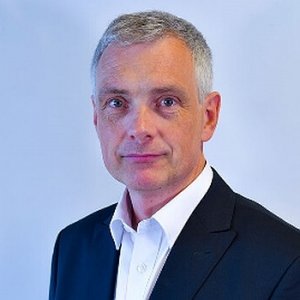
Pavol Holbík
Head of training services at omnicom, Member Of The Board at itSMF Slovensko
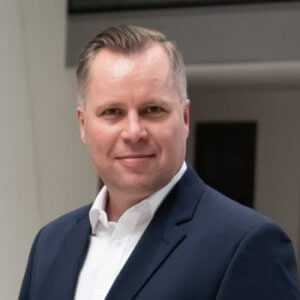
Igor Dimitrovič
ITSM Specialist at Slovenská sporiteľňa, Chairman Of The Board at itSMF Slovensko

Veronika Ďurfinová
IT Specialist at Softec, itSMF Slovakia Administration

Martin Podhajský
Making Knowledge available at VÚB Banka, Member Of The Board at itSMF Slovensko
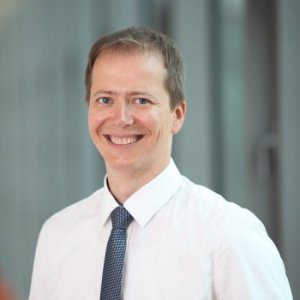
Martin Lacko
Head of Change management in Slovenská sporiteľňa, Member of the Supervisory Board at itSMF Slovakia

Miroslav Havelka
CEO at Laudeo, Member of the Supervisory Board at itSMF Slovakia